Khmer
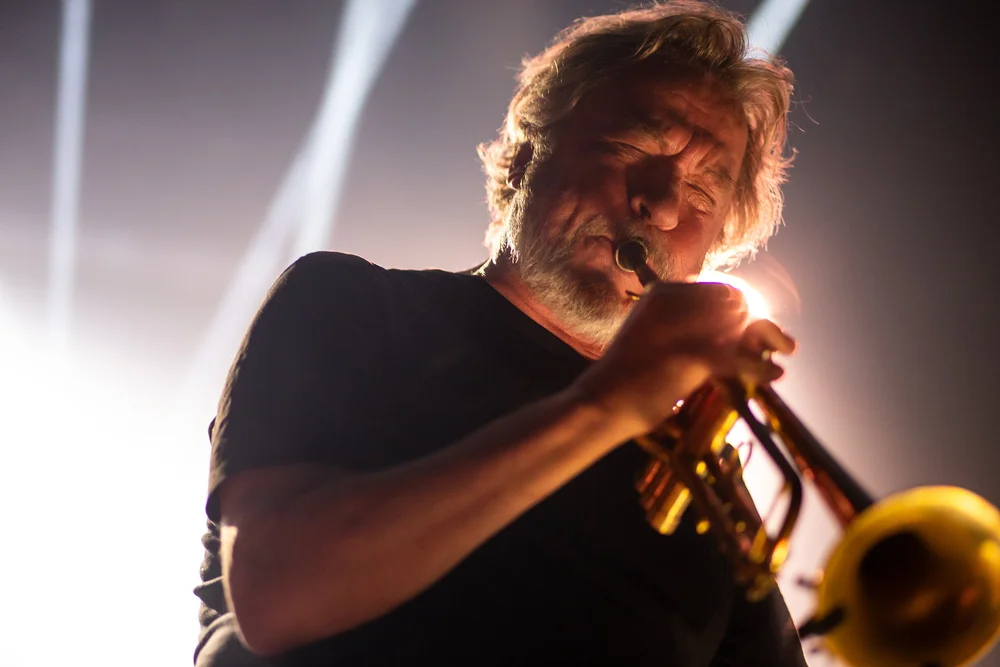
Khmer is a defining project in the artistic trajectory of Nils Petter Molvær, marking a pivotal shift in both his own work and the broader landscape of contemporary jazz. Originally emerging as an album, the project has evolved into a lasting framework for performance and reinterpretation, where the boundaries between composition, production, and live expression are continuously re-examined. It stands as a landmark example of how jazz can be recontextualized through the integration of electronic music, ambient textures, and elements drawn from global sonic traditions.
Lorem ipsum dolor sit amet consectetur
At its core, Khmer represents a deliberate departure from conventional jazz structures. Rather than relying on established forms, harmonic progressions, or traditional ensemble roles, the project is built around atmosphere, rhythm, and texture. The music unfolds less as a sequence of compositions and more as a continuous sonic environment, where individual elements are layered and shaped in real time. This approach places equal emphasis on sound design and musical performance, blurring the distinction between instrumentalist and producer.
The trumpet, Molvær’s primary instrument, occupies a central yet transformed role within this landscape. Instead of functioning purely as a melodic voice, it becomes a source of timbre and spatial presence. Through the use of effects, delays, and electronic processing, the instrument is extended beyond its acoustic limitations, often dissolving into the surrounding textures. This treatment allows the trumpet to operate both as a lead voice and as part of the underlying fabric of the music, shifting fluidly between foreground and background.
Rhythm plays a crucial role in shaping the identity of Khmer. Drawing on influences from electronic dance music, hip-hop, and breakbeat culture, the project incorporates programmed beats and loop-based structures that provide a strong, grounded pulse. These rhythmic elements create a sense of forward motion that contrasts with the more expansive and ambient layers above them. The interplay between rhythm and atmosphere becomes a defining characteristic, giving the music both immediacy and depth.
The sonic palette of Khmer is deliberately wide-ranging. Acoustic instruments coexist with synthesized sounds, field recordings, and processed samples, forming a hybrid language that resists simple categorization. Guitars may be treated as sources of noise and texture rather than harmonic support, while bass lines often function as both rhythmic anchors and melodic elements. This fluid use of instrumentation contributes to a sense of openness, where each sound is valued for its contribution to the overall environment rather than its adherence to a predefined role.
A strong emphasis on space and dynamics underpins the project’s aesthetic. Silence and restraint are used as compositional tools, allowing sounds to emerge and dissipate with clarity and intention. This sensitivity to space gives the music a cinematic quality, where tension and release are shaped through gradual shifts rather than abrupt changes. The listener is invited into a landscape that feels both intimate and expansive, with each detail contributing to a larger sense of atmosphere.
As a live project, Khmer extends far beyond its origins as a studio recording. Performances are characterized by a high degree of flexibility, with material continuously adapted and reinterpreted. The structure of the music allows for improvisation within defined frameworks, enabling musicians to respond to the moment while maintaining coherence. This balance between control and openness ensures that each performance remains distinct, shaped by the interaction between performers, technology, and the acoustic environment.
Technology is central to the realization of Khmer, not as a supplementary element but as an integral part of the compositional process. Sampling, looping, and real-time processing are used to construct and manipulate the musical material, creating layers that evolve over time. The studio itself becomes an instrument, with production techniques playing a role equal to that of traditional performance. This integration of technology allows for a level of detail and complexity that would be difficult to achieve through acoustic means alone.
The visual dimension often complements the musical experience in live settings. Lighting and projection are used to reinforce the atmosphere, extending the sonic environment into a visual space. These elements are carefully aligned with the music, enhancing its immersive qualities without imposing a fixed narrative. The result is an experience that engages multiple senses, where sound and image interact as part of a unified whole.
Thematically, Khmer operates within a space defined by mood and sensation rather than explicit storytelling. The music often evokes a sense of distance, movement, and introspection, drawing the listener into an abstract yet emotionally resonant world. There is a subtle tension between organic and synthetic elements, reflecting a broader exploration of how human expression interacts with technological mediation. This tension gives the project a contemporary relevance, addressing questions that extend beyond music itself.
The international impact of Khmer has been significant. It has reached audiences well beyond the traditional jazz sphere, resonating with listeners from electronic, ambient, and experimental music communities. This cross-genre appeal reflects the project’s ability to communicate through sound rather than stylistic labels. By operating outside conventional definitions, Khmer has contributed to a broader rethinking of what jazz can encompass in a modern context.
Collaboration plays an important role in the ongoing life of the project. Various musicians and producers have contributed to both studio recordings and live performances, each bringing their own perspective to the material. These collaborations are not merely additive but transformative, influencing how the music evolves over time. The openness of the framework allows for continuous reinterpretation, ensuring that Khmer remains a living and adaptable entity.
In the studio, the project exemplifies a process-oriented approach to composition. Ideas are developed through experimentation, layering, and refinement, often emerging gradually rather than being fully formed from the outset. This method reflects a broader shift toward thinking of music as something constructed and shaped over time, rather than simply performed. The resulting recordings capture not only the final outcome but also the traces of this exploratory process.
A defining feature of Khmer is its ability to balance immediacy with complexity. The music can be immediately engaging, driven by strong rhythms and evocative textures, while also offering deeper layers of detail for attentive listening. This duality allows it to function in multiple contexts, from focused listening environments to more immersive, atmospheric settings. It invites both emotional and analytical engagement, revealing new aspects over repeated encounters.
Within the broader context of contemporary music, Khmer can be seen as part of a movement toward hybridity and cross-disciplinary expression. It challenges the notion of fixed genres, instead presenting music as a fluid and evolving practice. At the same time, it maintains a clear artistic identity, shaped by Molvær’s distinctive approach to sound and structure. This combination of openness and coherence is central to the project’s enduring influence.
Khmer continues to function as a reference point for artists interested in exploring the intersection of acoustic and electronic music. Its legacy lies not only in its sound but in its methodology—a way of thinking about music that prioritizes texture, space, and interaction over convention. By redefining the possibilities of the jazz idiom, it has opened pathways for new forms of expression, demonstrating how tradition can be transformed through innovation.
The project exists as an ongoing exploration of sound as environment, where composition, improvisation, and production converge. It reflects a commitment to pushing beyond established boundaries, creating a space where music can evolve in response to new technologies, influences, and contexts. Through this continuous process, Khmer remains both a landmark and a living work, shaping and being shaped by the changing landscape of contemporary music.